Upcoming Events
Or go to Past Events or the Events Calendar

Class: Weaving in Three Hours Join instructor Midge Colombo for a three hour class where you can design and weave a small project. The weaving looms are prepared ahead of time for this class so you can start weaving immediately. This class costs $65 and it’s perfect for beginners and those interested in finding out about weaving on a floor loom without a large up-front investment. The next class will be held on Saturday November 14 from noon to 3:00 p.m. To register: Stop by or call the museum at 860-456-2178 during our normal business hours. More information is on our weaving lessons page.
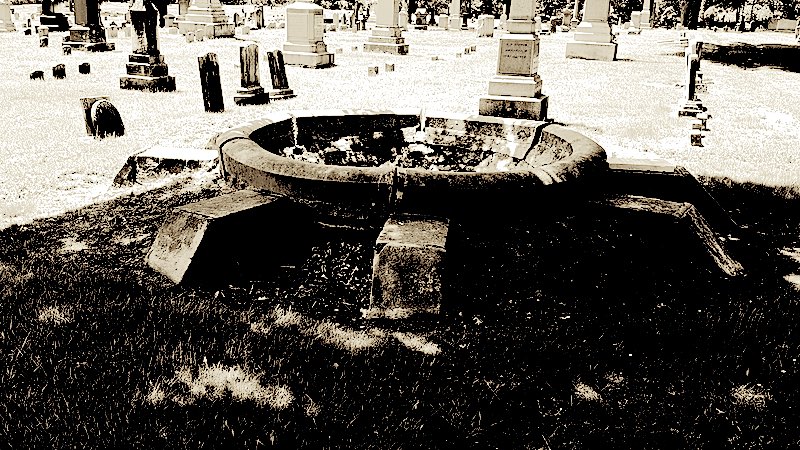
HEROES FOR SCARY TIMES: A GUIDED WALKING TOUR OF THE HISTORIC OLD WILLIMANTIC CEMETERY
We live in scary times. So did people in Windham and Willimantic in the late 1700s and early-to-mid 1800s. They faced invasions of frogs (well, maybe), revolutions, passionate struggles over slavery and human rights, an armed mob marching on a Willimantic church, attacks on freedom of speech, and a bloody civil war. How did heroes from the past rise to meet these crises? How did 19th-century historians record these struggles so that they wouldn’t be forgotten. As we approach Hallowe’en, join Windham Town Historian Jamie Eves for a walking tour of the Old Willimantic Cemetery to meet some local heroes from scary times. Level walking, some but not all of it on pavement.
Guide: Jamie Eves, Windham Co-Town Historian.
Parking: Tyler Square (next to Taco Bell) or Stop and Shop
Where: Old Willimantic Cemetery, Main Street, Willimantic (across the street from the Stop and Shop) — Jamie will be waiting at the middle entrance
When: Saturday, Oct. 24, 2-3:30 p.m.
Weather: Will take place in good weather or even light rain; if heavy rain, event will be canceled.
For more information: Text 860-617-4354
Accessibility: Level walking. Some of the walkways are paved, but others are grassy. No benches.
Restrooms: There is a Taco Bell next door.
Pets: Not a good idea unless service animals.
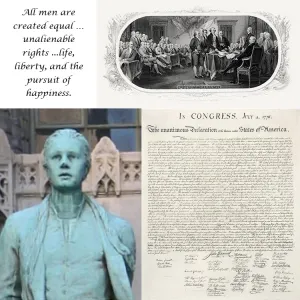
Regular Program: America 250: Still Revolutionary. Fourth Sunday of Each Month Throughout 2026, 4 p.m. A series of illustrated lectures on the significance of the American Revolution by historian Bev York. Held in historic Dugan Hall, 157-B Union Street, Willimantic. Appropriate for teens and adults. On-street parking on the south side of Union Street, or in the Museum’s parking lot at 411 Main Street. Free and open to the public. Funding provided by the Leo J. and Rose Pageau Trust. Donations appreciated for support of the Mill Museum. Topics are subject to change, so check back here for updates.
- Mar. 9. Nathan Hale: Scholar, Soldier, and Spy. The life and times of Connecticut’s State Hero. (Postponed from Feb. 22 because of storm.)
- Mar. 22. John Trumbull, Painter of the Revolution.
- Apr. 26. What People Used for Money before the Revolution. Colonial Currency. Dr. Peter Jones, guest speaker.
- May 24. Soldiers’ Rations. Revolutionary War Commissary.
- June 28. Declaration of Independence. Local founders.
- July 26. Outhouses and Their Role in the Revolution.
- Aug. 23. The Story of the Bicentennial Wagon Train.
- Sep. 27. Eighteenth-Century Herbal Cures and Treatments.
- Oct. 25. Prisons and Prison ships in the Revolution.
- Nov. 22. Eighteenth-Century Bundling, Brides, and Babies (Not Necessarily in That Order).
- Dec. 27. Washington Crossing the Delaware and More.
Regular Program: Monthly Spinning Bee. Fourth Sat. of Each Month, 10 a.m. – 1 p.m. Experienced spinner and weaver Peggy Church leads a drop-in spinning bee at the Mill Museum each month in the Museum’s historic Dugan Hall, 157-B Union St., Willimantic. Bring a spindle or wheel or just hang out. There is no admission fee for this activity. Beginners are welcome. Museum visitors are welcome to watch and ask questions. Park along Union St. or in our Main Street parking lot.
Past Events
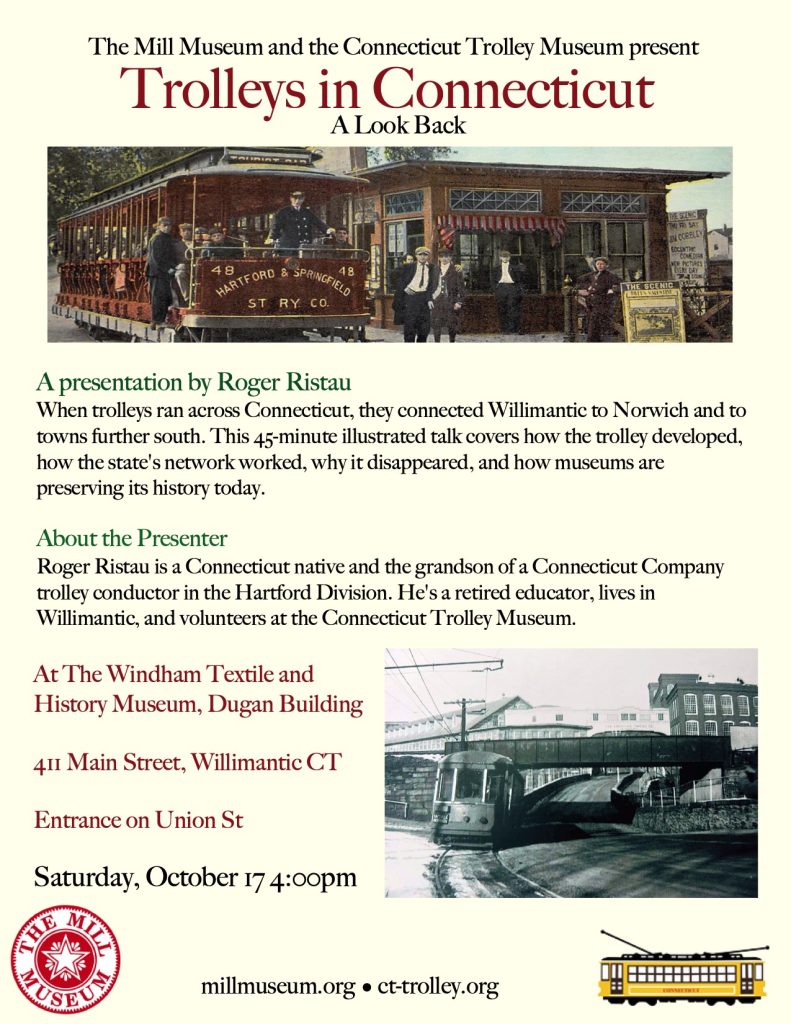
Special Event: Trolleys in Connecticut, A Look Back The Connecticut Trolley Museum’s Roger Ristau will be presenting a fascinating look back at trolleys in Connecticut, with a focus on the Willimantic area. If you’re a local history buff or a railroad enthusiast, this is a must-see event. This event is free to the public and it will be held on Saturday October 17th at 4:00 p.m. This presentation will be held in Dugan Hall, upstairs (Entrance at 157B Union St.)
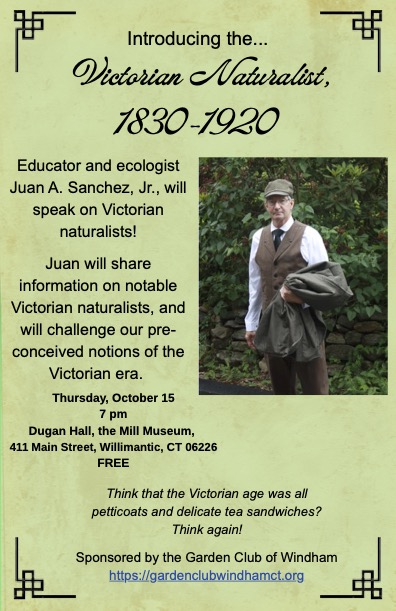
Garden Club Event: Victorian Naturalist 1830-1920. Join the Garden Club on Thursday October 15th at 7:00 p.m. for a deep dive into the naturalists of the Victorian era with Master Naturalist Juan A. Sanchez Jr.
This event will be held upstairs in Dugan Hall, 157B Union St. is open to the public free of charge. On-street parking on the south side of Union Street is available, or in the Museum’s parking lot at 411 Main Street. Accessible reserved spaces are directly in front of the Union St. entrance.
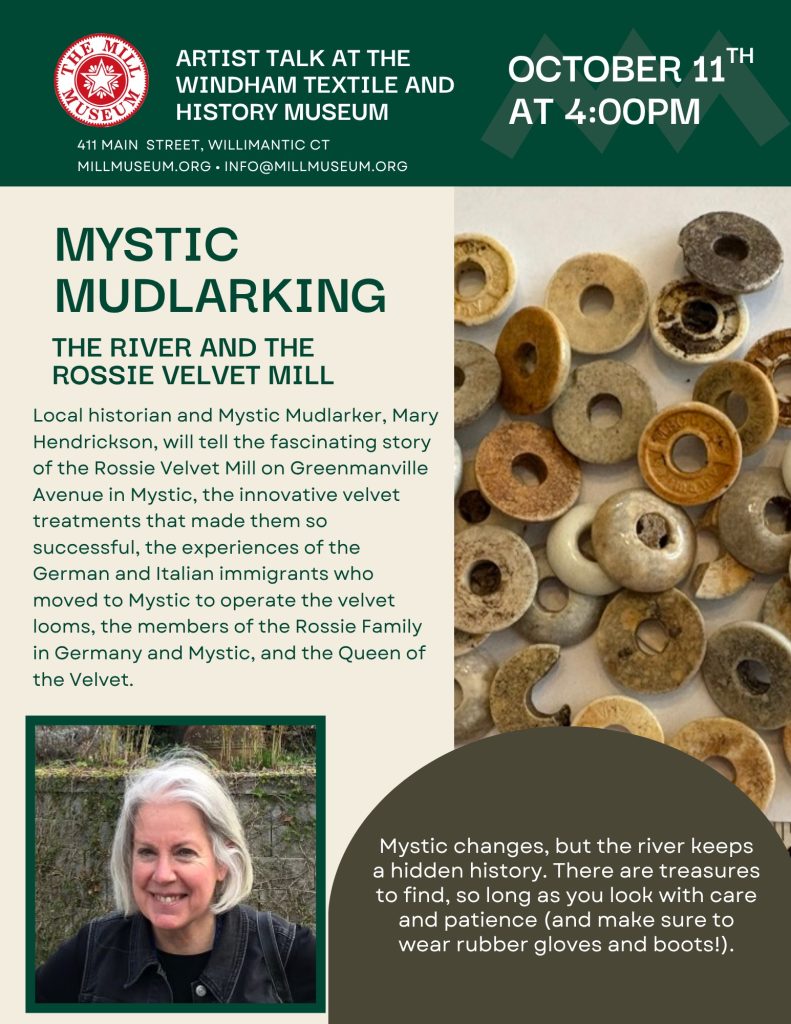
Special Event: Artist talk at the Windham Textile and History Museum, Mystic Mudlarking, The River and the Rossie Velvet Mill Join us on Sunday, October 11th at 4:00 p.m. for a fascinating talk by Mary Hendrickson on artifacts found in the Mystic River and their ties to the history of the Rossie Velvet Mills, and the local culture and community. The talk is free to the public. The Rossie family owned mills in both Mystic and Willimantic.
The author, Mary Hendrickson is a fine artist and historian who has conducted extensive research in this area.
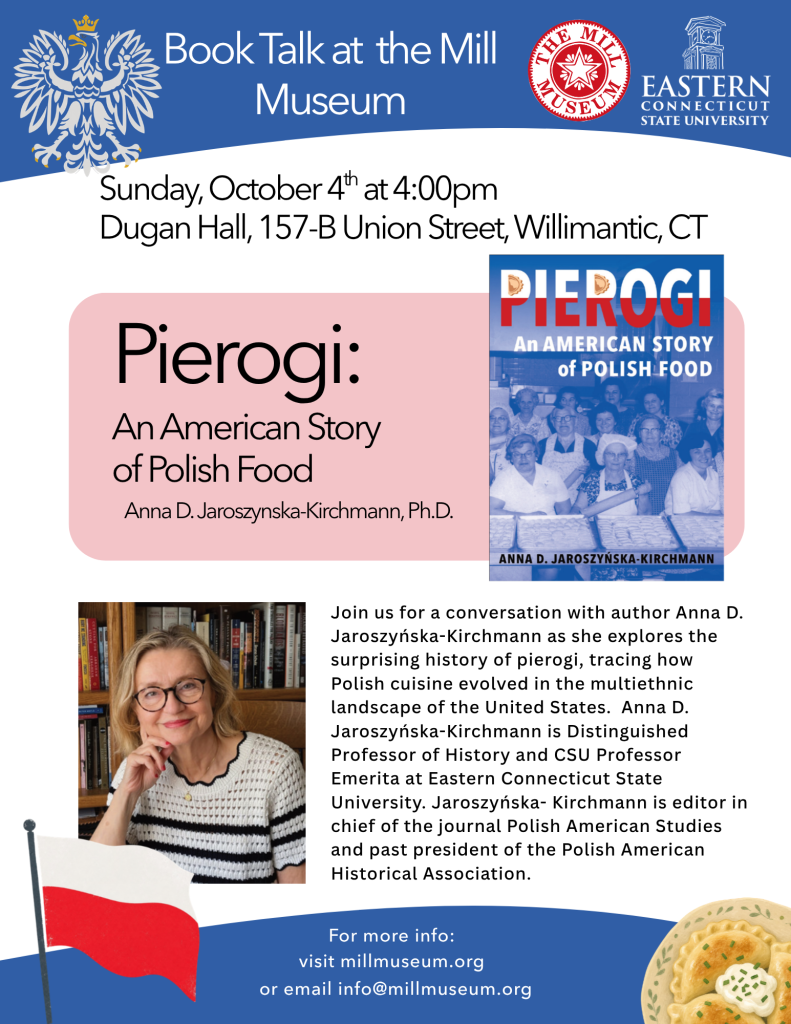
Special Event: Pierogi: An American Story of Polish Food Join us on Sunday October 4th at 4:00 p.m. for a discussion of this recently-published work by Anna D. Jaroszyńska-Kirchmann, Ph.D. This event is free to the public.
This book explores how Polish cuisine evolved and became a symbol of Polish American identity.
Dr. Jasroszyńska-Kirchmann is a Distinguished Professor of History and CSU Professor Emirita at Eastern Connecticut State University. She has previously held board and staff positions at our museum and has also curated significant collections here.
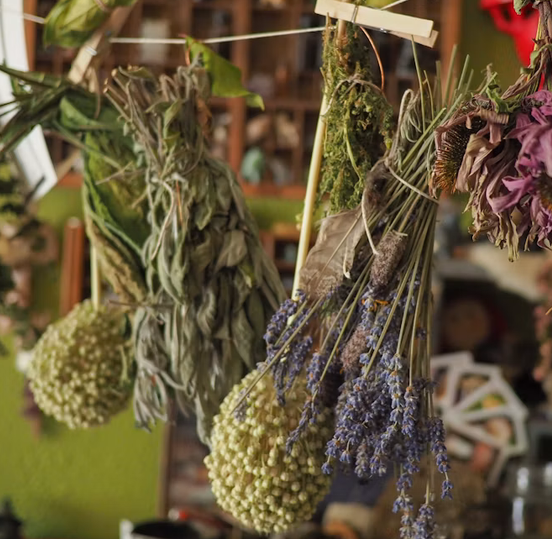
Sunday, September 27 at 4:00 p.m.
Bev York presents Eighteenth-Century Herbal Cures and Treatments as part of her America 250 program. This talk is free to the public.
Events Calendar
All museum events, classes, lectures and special open hours are listed here.