About
We invite you to become a member of our maker community as we open the museum’s new makerspace in in the spring of 2027. Whether you’re interested in garment construction, alterations, mending, or non-apparel items like upholstery, bag construction, or soft goods, we have the community and tools.
We presently have an educational workspace on the ground floor of Dunham Hall. This area is focused on spinning, weaving, knitting, crocheting, and embroidery. This space is available to all museum visitors. We also have a weaving studio containing several floor looms where we conduct classes.
Our new makerspace in the adjacent Dugan Mill building will include our industrial machines downstairs, and a textile studio upstairs. The textile studio will provide everything you need from design and patternwork to cutting, sewing, and finishing.
Classes and Training
We plan to host classes ranging from sewing basics to mending workshops as well as safety training. We currently offer two different weaving classes in our weaving studio.
Hours and Pricing
Our current plan for the new makerspace is to be open during our normal business hours and on select evenings. We are still working out the details, but our expectation is that the makerspace will be free to museum members and available to the public for a fee or in exchange for volunteer service.
You can also see our equipment list, updated as we move forward with our preparations.
The Dunham Hall Education Space
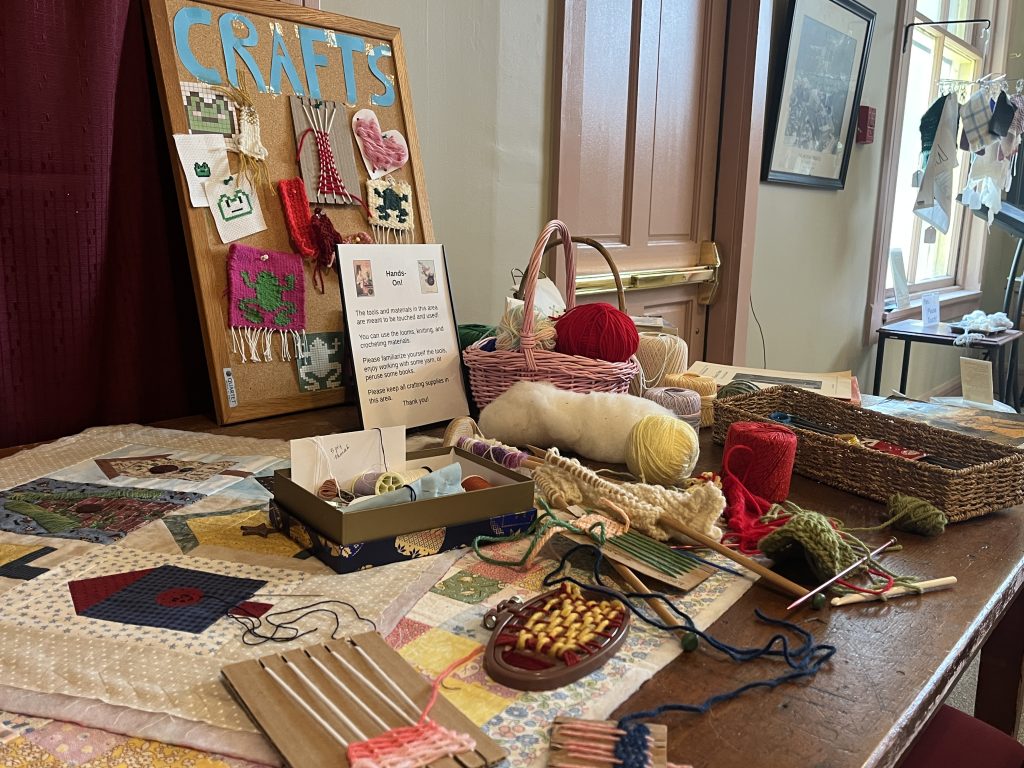
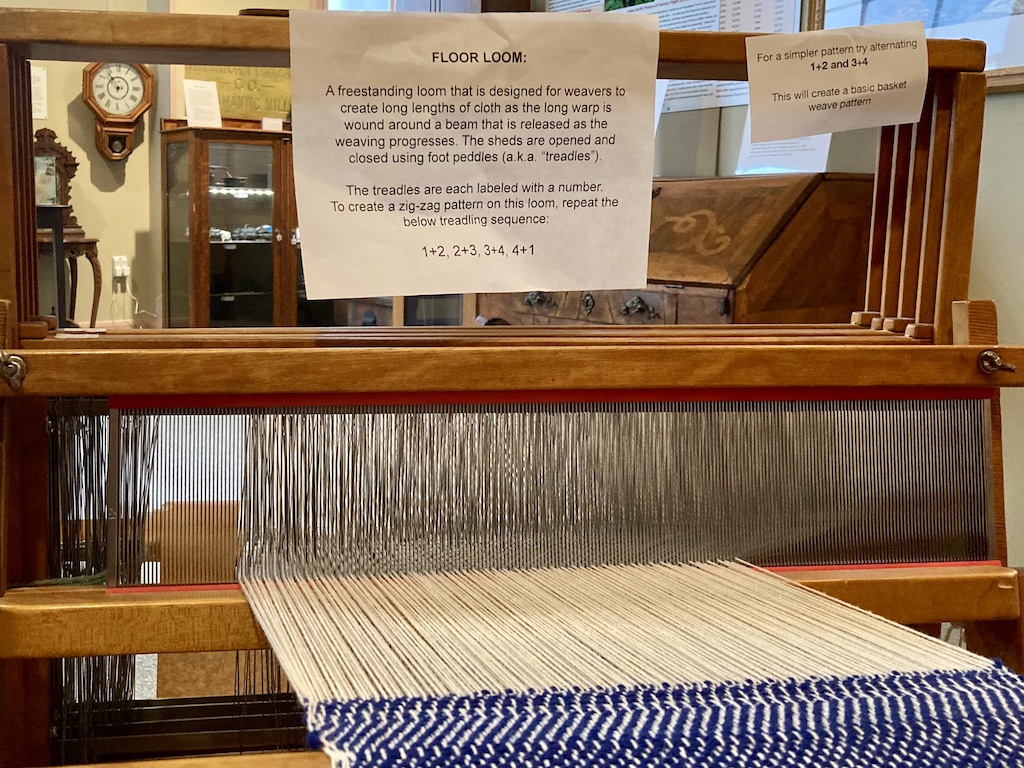
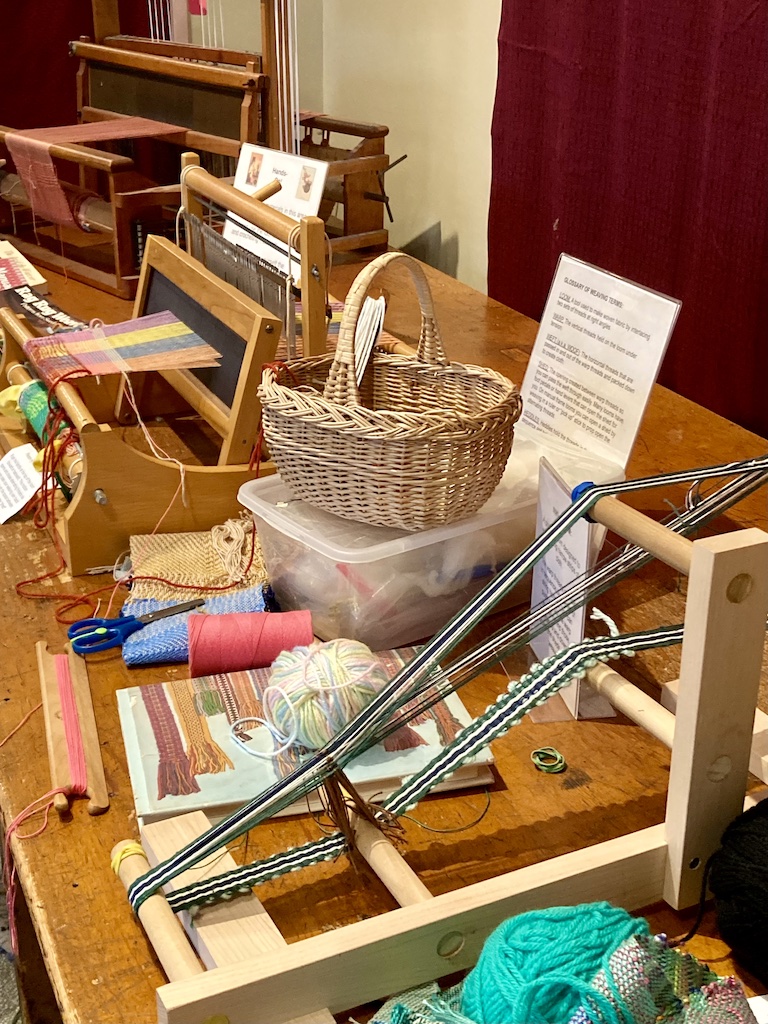
The Dunham Hall educational space is open now and may be used by all museum visitors.
We invite the public to try our spinning and weaving equipment including four shaft floor and table looms, an inkle loom, several frame looms, foam kumihimo braiding looms, as well as crochet, needlepoint, and knitting materials.
We often have volunteer demonstrations in this space and it is frequently used by visiting school groups.
The Dugan Mill Space
We will soon be offering more resources to our members though our Dugan Mill industrial machine collection downstairs, and a textile studio upstairs in Dugan Hall.
Dugan Mill, Industrial Exhibit
Most of our operating industrial machine collection is found on the ground floor or Dugan Mill. There is an accessible ramp leading from the parking lot to this space.
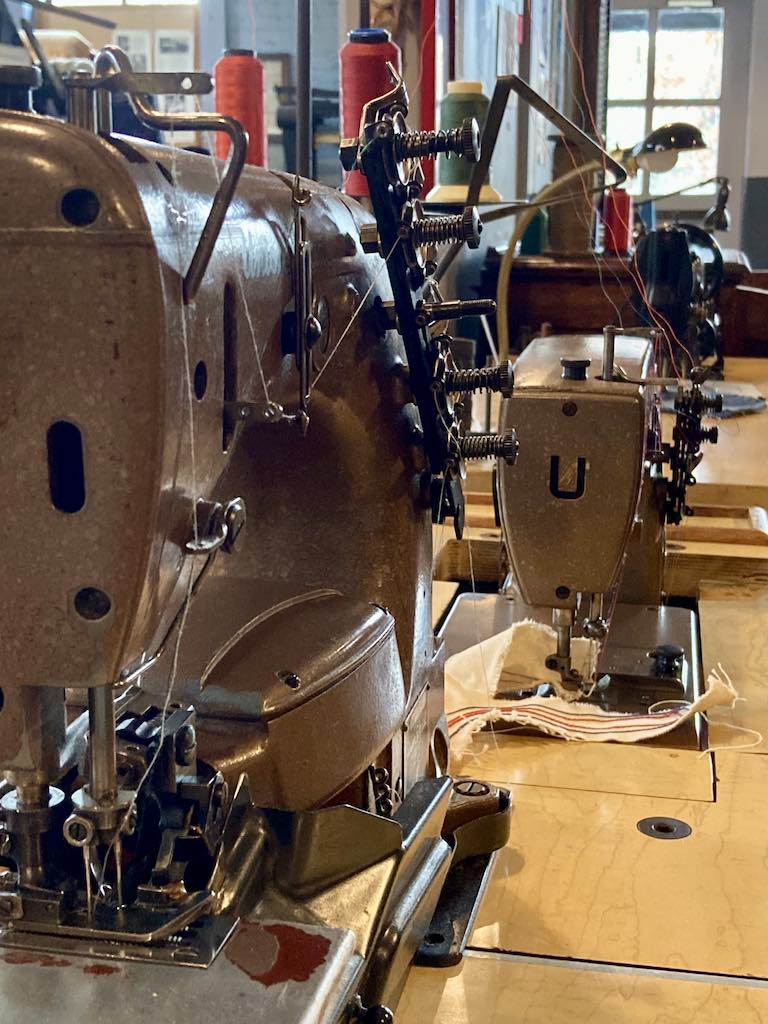
In this space you will find industrial sewing machines that produce beautiful and often unique stitches in a wide variety of materials. Industrial machines are very sturdy and tend to produce very well-formed and balanced stitches.
A Few Examples from our Industrial Collection
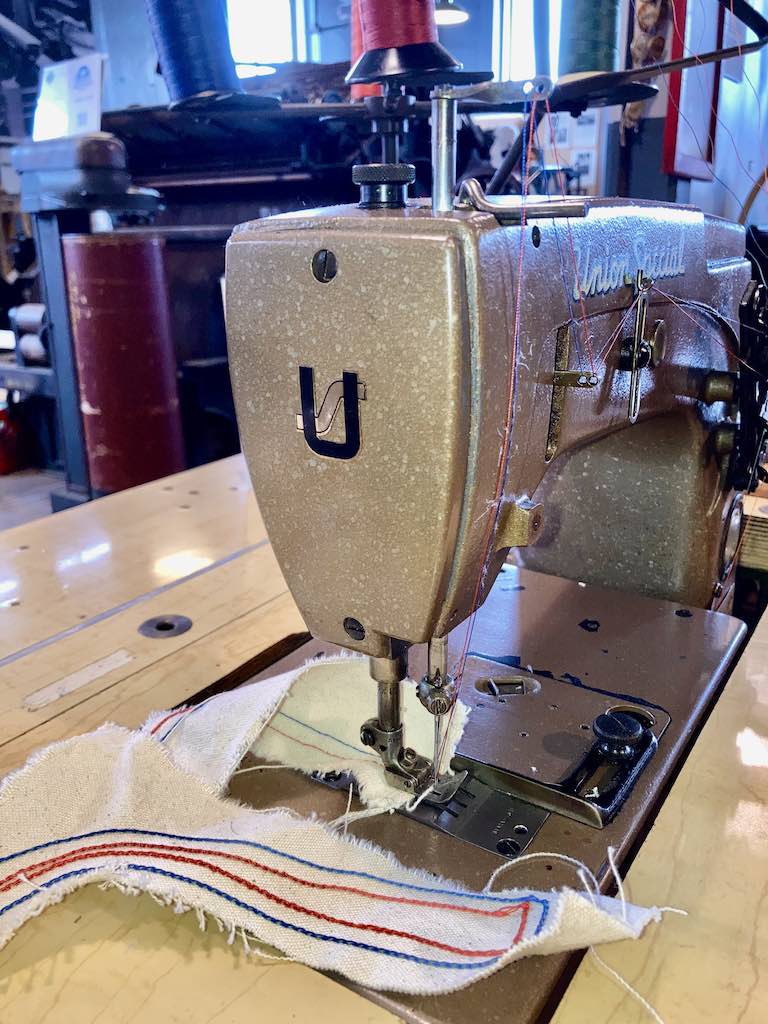
Our Union Special machines are among our favorites. Both are four-thread two needles machines: one produces a chainstitch and the other produces a type of lockstitch. These machines are capable of producing wonderful decorative stitches in a wide variety of materials using a wide range of threads. Like most industrials, they can run blazingly fast.
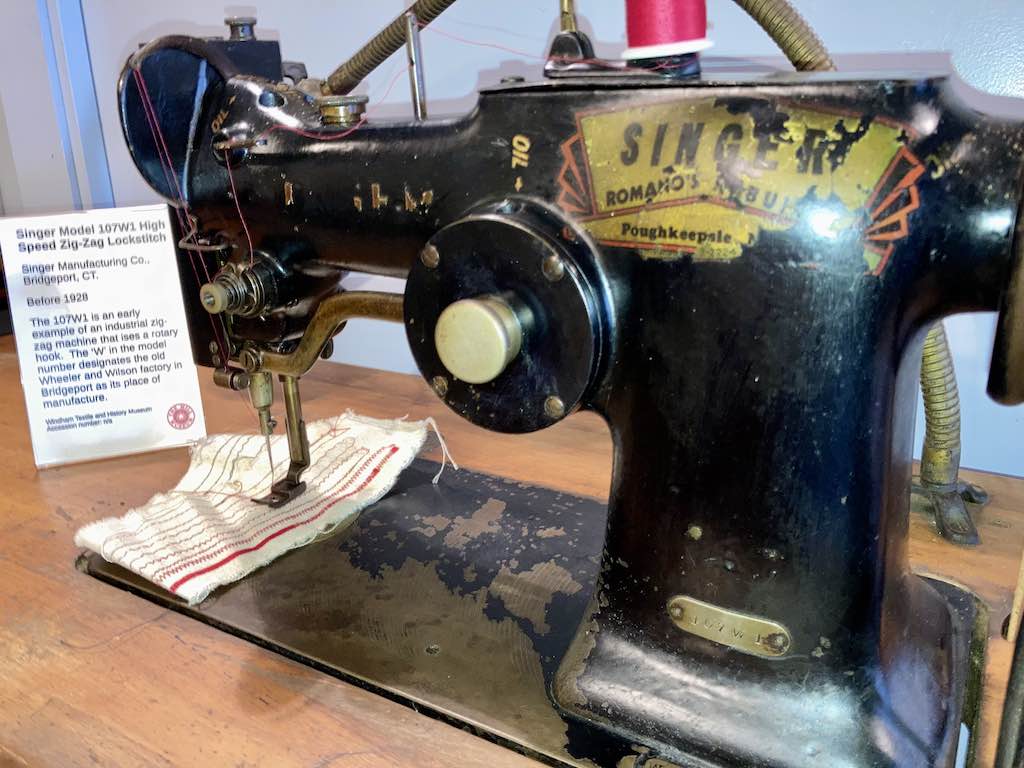
The Singer 107W1 is an industrial zig-zag machine that was built in the former Wheeler and Wilson plant in Bridgeport, CT. These machines found widespread use in knitwear manufacturing for overseaming and are capable of more than 2500 stitches per minute. This machine produces a beautiful satin stitch.
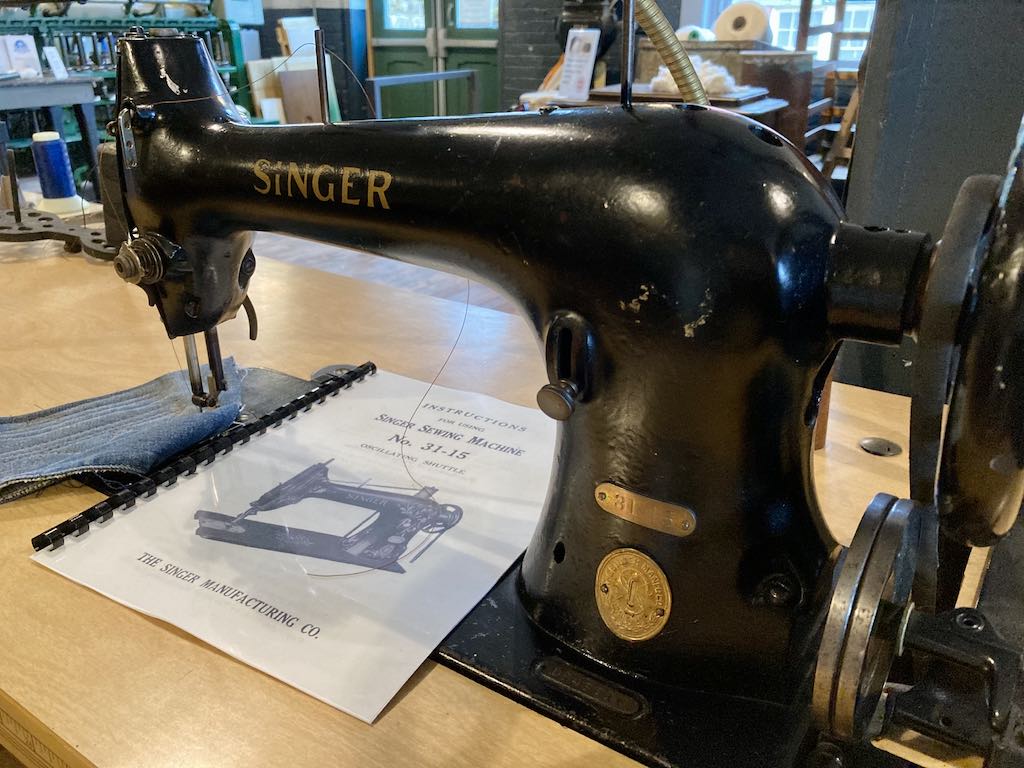
The Singer 31-15 is a single needle lockstitch machine. Marketed as “The Tailor’s Machine” and still known by that name, these machines were extremely popular (and remain popular in the hobby community). Our example can produce beautiful well-balanced straight stitches in everything from shirting cotton to garment weight leather.
Dugan Hall, Upstairs
Also in the spring of 2027 we will be offering the use of Dugan Hall (upstairs) for pattern work, cutting, sewing, and finishing. The accessible entrance to this space is on Union Street. It is located directly above our industrial space.
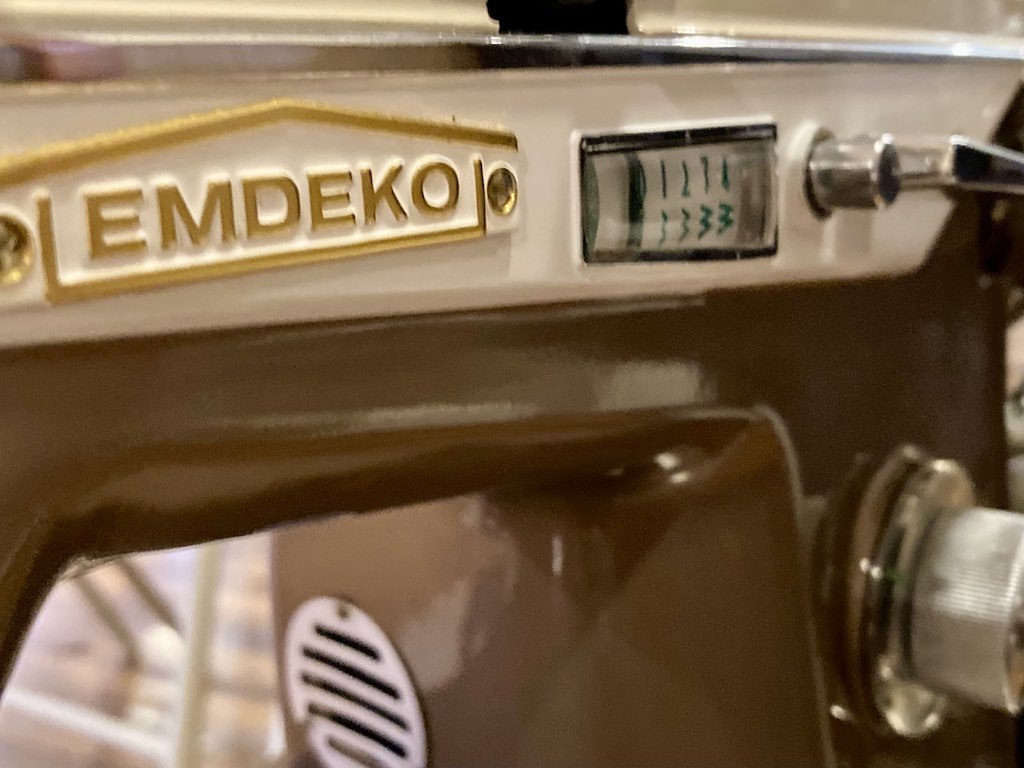
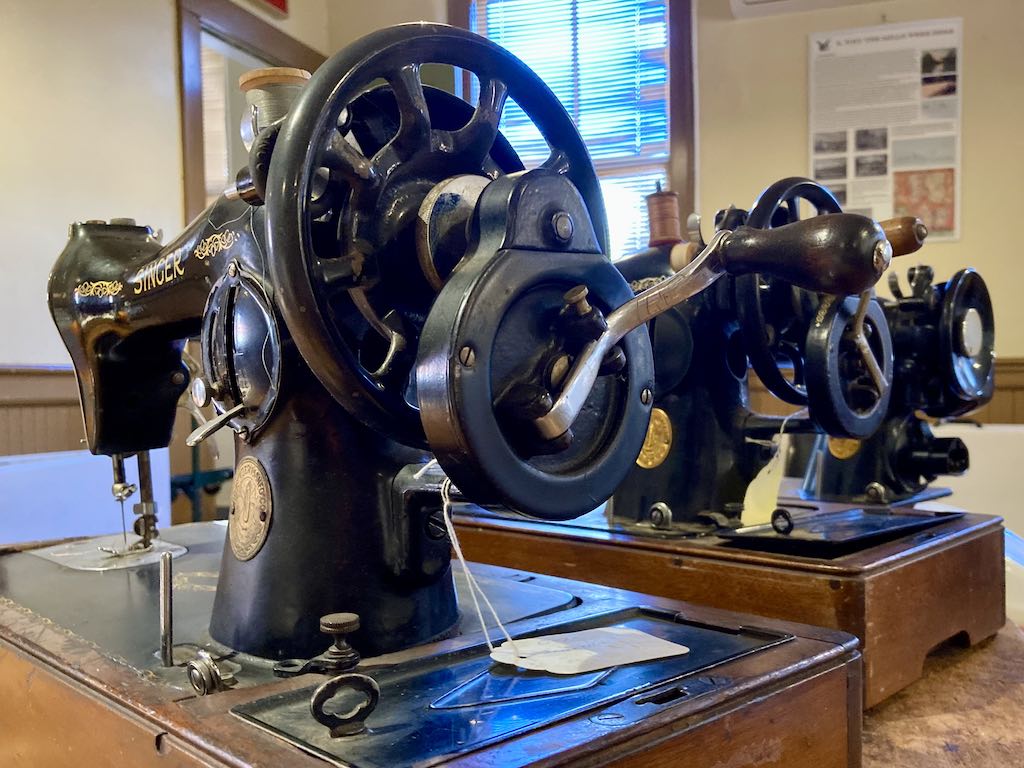
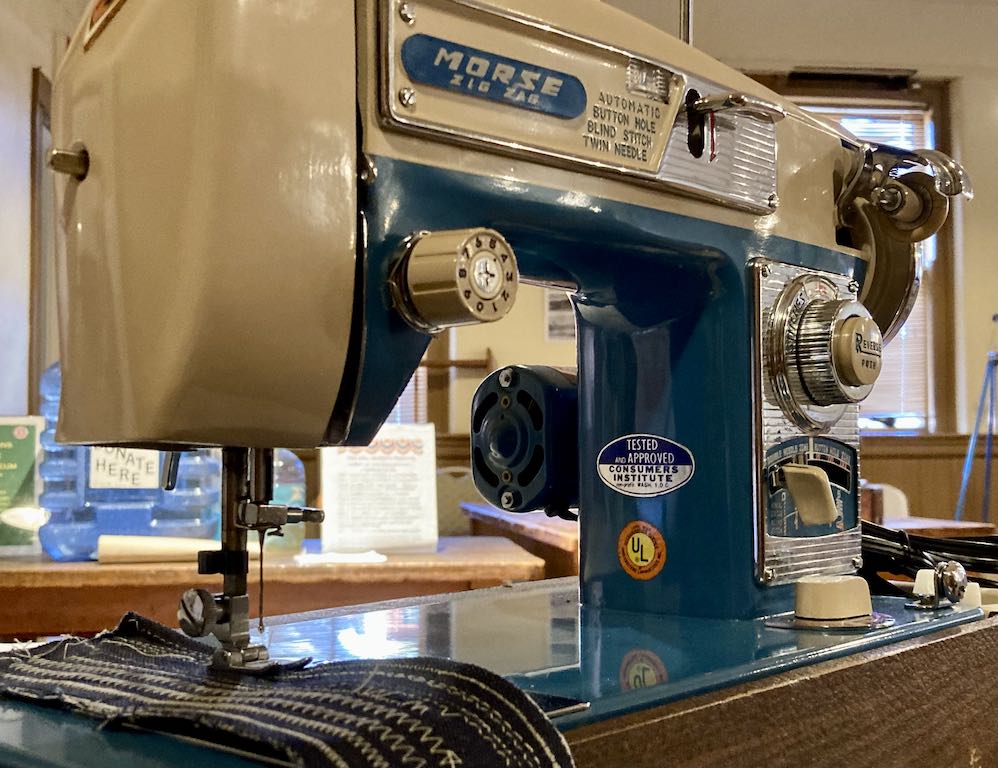
We will have a variety of home sewing machines available for use, ranging from hand-crank Singer Model 15s and 66s to a collection of Japanese HA-1 and zig-zag machines from the late 40’s through the 60’s, as well as more modern machines.
For finishing, we have a steamer, professional irons, a variety of pressing equipment, and a vacuum pressing table that holds fabric perfectly flat and actively draws moisture through the material.
Equipment List
The following list will be updated as we acquire materials and get equipment online.
Industrial Sewing Machines
- Chandler Class 401 Button Sewing Machine, Chandler Machine Co., Ayer MA., After 1905 (awaiting restoration) This machine is used to sew 2-hole or 4-hole buttons to fabrics. It is operated with a hand crank.
- Dinsmore Number 98 Chainstitch Machine, Dinsmore Manufacturing Company, Salem MA., Early to mid 20th c. (awaiting restoration)
- This machine is used to join bolts of fabric together for continuous processing in bleaching, dyeing, and drying operations. We are curious to see what the stitch looks like and what other applications it might have.
- Merrow Style A-3DW-3 Overseam Machine, Merrow Manufacturing Co. Hartford, CT., 1948 – 1949 (being restored)
- This Style A machine forms three thread overcast stitches on the raw edge of fabric while simultaneously trimming the fabric. The seams that are produced prevent unraveling of the raw fabric edge.
- Merrow Class 60-YM Overseam Machine, Merrow Manufacturing Co. Hartford, CT., c. 1950 (on static display, awaiting restoration)
- Singer Model 31-15 Single Needle Lockstitch, Singer Manufacturing Co., Elizabeth, NJ., 1909 (operating)
- Singer Model 251-21 Single Needle Lockstitch Machine, Singer Manufacturing Co., Elizabeth, NJ., 1960 (operating)
- Singer Model 29-4 Leather Patcher, Singer Manufacturing Co., Elizabeth, NJ., 1915 (being restored)
- Singer Model 47W26 Cylinder Bed Machine, Singer Manufacturing Co., Bridgeport, CT., 1928-1929 (operating)
- Our 47W26 is a cylinder bed machine used “for stitching tubular, concave or other irregularly shaped articles in cloth or leather.” These were popular for sewing gloves.
- Singer Model 107W1 High Speed Zig-Zag Lockstitch, Singer Manufacturing Co., Bridgeport, CT., Before 1928. (operating)
- Union Special 56400-PZ Two Needle Chainstitch Machine, Union Special Machine Co., Huntley, IL., ca. 1968 (operating)
- “Low throw” machine typically used for shirt construction. It uses two needles and two loopers to form two independent rows of stitches.
- Union Special 52300-F Two Needle Lockstitch Machine, Union Special Machine Co., Huntley, IL., ca. 1968 (operating)
- The 52300-F is a two needle, four thread lockstitch machine. It is capable of simultaneously seaming and overedging on lightweight materials such as those used in garments.
- Willcox and Gibbs High Speed Industrial Lock-Stitch (likely a type 10), Willcox and Gibbs Sewing Machine Co., NY, NY., Early 20th c. This machine was used by the test department at American Thread. (awaiting restoration)
- Waiting in the wings we have a Cornely chainstitch embroidery machine, c. 1890s. This machine will require a complete restoration before we can put it into service.
Home Sewing Machines
(Partial list, under development and subject to change)
- Singer model 15 (various, electric and hand-crank)
- Singer model 66 (various, electric and hand-crank)
- Singer Fashion Mate models 223, 239. Stylist 413, 417, others
- Singer Featherweight (x2)
- Morse 4300, Emdeko ZZ machine, others
- Janome 105
- Bernina Funlock 004D, 007D 3-4 thread overlockers